How Polymarket works
The market your fund trades, in plain words, followed through one soccer match from the opening question to the final payout.
Polymarket is where your fund places its bets: each market is one real-world question, its price is the crowd’s live odds, and a share pays $1 if the answer is yes and $0 if it’s no. Follow one soccer match through and the whole thing clicks.
Opusfund places its bets on Polymarket. Before you set a single rule, it helps to know what that is, in plain words, with one soccer match followed all the way through.
01A place to bet on real life
Polymarket is a website where people bet on questions about the real world, who wins an election, whether a team wins on Saturday, whether a price climbs past a number by a certain date. There are no stock charts to read and no finance background to have. If you can answer one question, do I think this will happen? You already have everything you need to follow along.
One thing to set straight first: here, a market is not a company you own a slice of. A market is a question.
02Every market is one question
Each thing you can bet on is called a market, and every market is a single question with a yes-or-no answer that the future will settle. Take the one we'll follow for the rest of this page: Will Brazil win Saturday's match? Right now, nobody knows. On Saturday, everybody will. That stretch, between now and the answer, is the market.
Other markets work exactly the same way: Will this candidate win the election? Will this coin pass $100,000 before July? A clear question, and a date when reality answers it.
03The price is the crowd's odds
Here is the one idea that makes everything else click. Every market has a price, a number between 0 and 1, easier to read as 0¢ to 100¢. That price is simply what the crowd betting on it currently believes the chance is. If Will Brazil win? sits at 0.70, the crowd is saying: about a 70% chance.
A price near 1 means the crowd is almost sure it happens; near 0, almost sure it doesn't; near the middle is a coin-flip. And the price never sits still: every new bet nudges it. It is the crowd thinking out loud.
04What you actually buy, shares
When you place a bet, you buy shares of one answer: Yes, or No. A share's price is that same 0-to-1 number, read in cents. So if Will Brazil win? is trading at 0.70, one Yes share costs you 70¢.
Now the rule that makes it pay. When the match is over and the market settles, every share of the correct answer is worth exactly $1, and every share of the wrong answer is worth $0. Nothing in between. Buy one Yes share at 70¢: if Brazil wins, it's worth $1 (your 70¢ became a dollar, +30¢); if Brazil loses, it's worth nothing. The cheaper you buy a share you believe in, the more reality pays you for being right.
| If the match ends… | Your 70¢ Yes share is worth | Your result |
|---|---|---|
| Brazil wins | $1.00 | +30¢ |
| Brazil loses | $0.00 | −70¢ |
05Prices move, then the market resolves
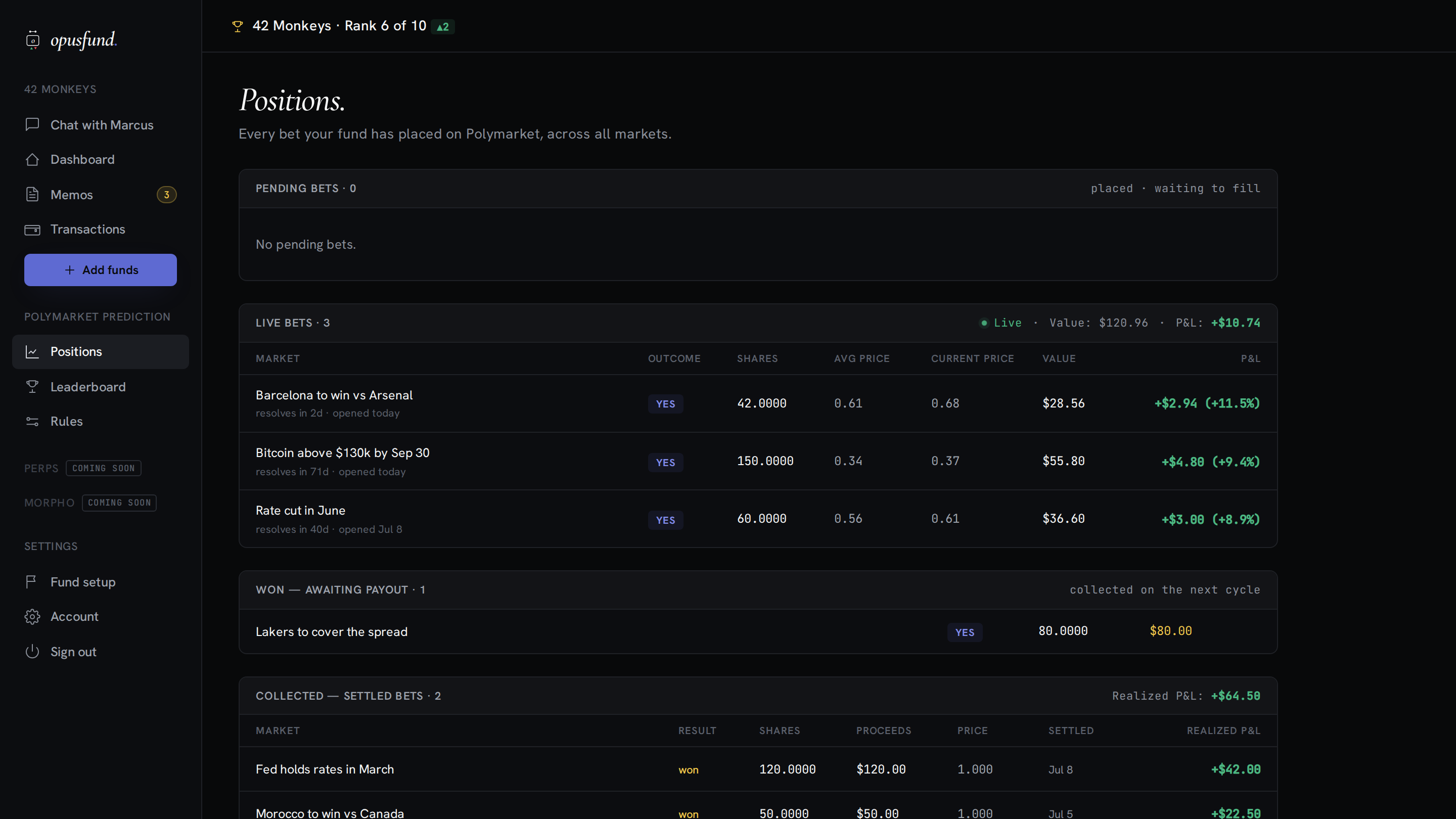
Until Saturday, that 0.70 will not stay put. A key player gets injured, a manager talks to the press, more people pile onto one side, and the number drifts up or down. The price is always the crowd's latest guess, not its first one. Then Saturday comes, the match is played, and the market resolves: the real answer is finally known. Winning shares pay $1, losing shares are worth $0, and the market closes for good.
You never have to wait for the answer. Your shares trade at every moment, at the current price.
Buy Yes at 61¢, watch the crowd come around to 74¢. You can sell right there and bank the gain before the match is even played. Or watch it slip to 41¢. You can sell and stop a small loss from becoming a big one. Resolution is one way a bet ends. Selling well is the other, and a fund that knows when to take its money is winning twice.
06Why the crowd is sometimes wrong
The price is the crowd's best guess, but a guess is all it is. Crowds overreact to a dramatic headline. They miss a dull but important fact. Often they are simply slow to catch up. When that happens, the price drifts away from the real chance, the market is mispriced.
Perhaps Brazil's true chance is closer to 80%, but a scare story has left Yes shares sitting at 0.70. That gap is the whole opportunity: buy the side the crowd has underpriced, and if you are right, reality pays you the difference.
A price is a probability, not a promise. Even an 80¢ favorite loses one time in five, so your fund sizes every bet to survive being wrong.
Finding those gaps, and telling the real ones from the noise, is exactly what your fund does, market by market.
What to remember
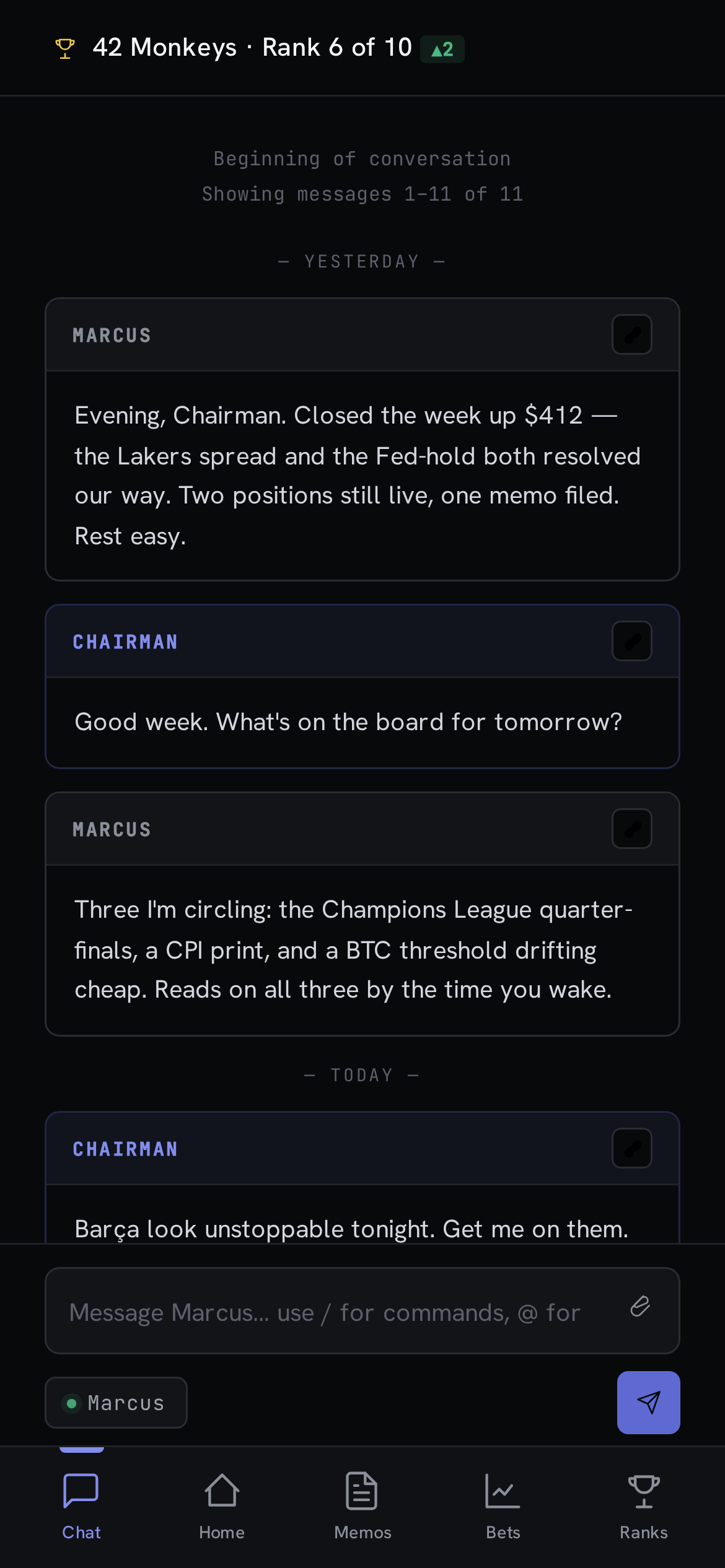
- Each market is one question real life will settle, e.g. will Barcelona win Saturday?
- The price is the crowd’s odds 62¢ means a 62% implied chance.
- You buy shares that pay $1 if right, $0 if wrong; the price is your cost.
- Prices move as beliefs move, then the market resolves, and the crowd is sometimes wrong, which is your fund’s opening.